

Solana Eastlane New Cairo
Last Updated At : 07 November 2026 | Writer: Inland
FOR SELL
Description
Solana Eastlane New Cairo by ORA Developers: Prices and Payment Plans 2026
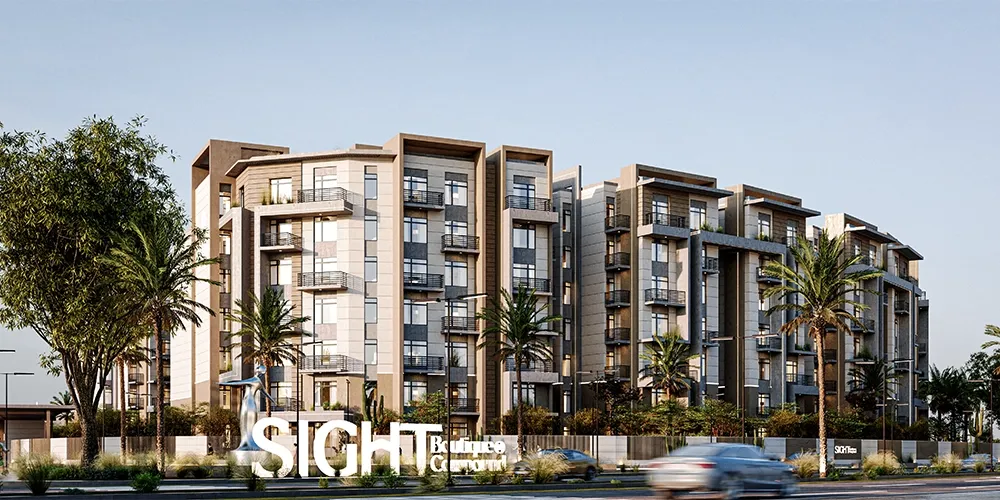
Solana Eastlane is a commercial, medical and serviced-residential strip developed by ORA Developers, sitting directly on South 90th Street in New Cairo, opposite Hyde Park and inside the Golden Square.
The project covers about 26.6 feddans with roughly 1,100 metres of frontage on South 90th. Eight buildings sit on it: one medical building branded Medica, holding 108 clinics across three floors above ground-floor retail, and seven serviced residential buildings.
Clinics start at 57 square metres and EGP 14 million. Serviced apartments start at 62 square metres and EGP 8.9 million. Administrative offices start from around 57 square metres at EGP 14.3 million. Deposits begin at 5%, terms reach nine years, and delivery is targeted for 2030.
For current prices, available units and payment plans, call 01003366453.
This is not the residential Solana East
The naming invites confusion, so it is worth settling first.
Solana Eastlane is the commercial and medical strip on South 90th Street. Solana East is a separate residential compound with villas and townhouses. Solana New Zayed is a different project entirely, in West Cairo.
Nothing on this page describes a residential compound. Eastlane is commercial, medical and serviced-apartment product, and it should be assessed as commercial real estate rather than as housing. If you have seen a villa price or a compound amenity list attached to the word Solana, it belongs to one of the other projects.
About Solana Eastlane
ORA Developers built Eastlane as a mixed-use strip rather than a mall, combining three uses on one site: medical clinics in a dedicated building, administrative offices, and serviced hotel apartments.
The project’s components:
- Total area: approximately 26.6 feddans, or about 111,720 square metres
- Frontage: roughly 1,100 metres on South 90th Street
- Buildings: 8 in total, one medical and seven serviced residential
- Medical building: Medica, building B2, ground floor plus three upper floors
- Clinics: 108 across three floors, 36 per floor
- Ground floor of Medica: retail and food and beverage
- Parking: underground
- Clinic sizes: 57 to 155 square metres
- Delivery: targeted 2030
Three different investments live on this site and they behave differently. A clinic is a long-lease asset with a tenant who physically cannot move without losing patients. An office tracks the business cycle. A serviced apartment is a hospitality play dependent on whoever operates it. Deciding which one you are buying comes before everything else on this page.
Solana Eastlane location
The project fronts South 90th Street directly, opposite Hyde Park compound and a short distance from Mivida, inside the Golden Square. South 90th is one of New Cairo’s primary arteries and the Golden Square is its most established premium sub-market.
Approximate distances:
- Hyde Park compound: directly opposite
- Mivida: a short distance
- American University in Cairo: 5 minutes
- Mohammed bin Zayed axis: 5 minutes
- North 90th Street: accessible from the project’s position on South 90th
- Middle and Regional Ring Roads: direct connections
- Cairo–Suez road: 15 to 20 minutes
- Ring Road: 20 minutes
- New Administrative Capital: 30 minutes
Times vary with traffic and route.
Why the address carries the business case
For a home, a good location is convenience. For a clinic or an office it is the entire proposition, and this one is unusually well placed for a reason that has little to do with road access.
Look at what sits across the street. Hyde Park is directly opposite. Mivida is minutes away. AUC is five minutes. That is a dense band of affluent, settled households immediately adjacent, and affluent settled households are precisely who pay privately for dentistry, dermatology, paediatrics, physiotherapy and the other specialities that fill a building like this.
A practitioner buying here is not waiting for a catchment to develop. It exists, it has money, and it is across the road.
The Golden Square designation reinforces it. The label carries weight with Egyptian buyers and tenants, and it covers the part of New Cairo where values and rents have held most consistently. A position on South 90th inside it is about as central as commercial property in New Cairo gets.
The wider road network is worth less than it appears. The Ring Road at twenty minutes and the Administrative Capital at thirty are useful, but nobody drives thirty minutes from the Capital for a dental appointment. This project lives on its immediate neighbours, and that is a stronger position than a long distance list would be.
The shape of the site
The project’s dimensions describe something specific, and it is the most important structural fact about it.
26.6 feddans is about 111,720 square metres. Spread across 1,100 metres of frontage, the average depth works out at roughly 102 metres.
So Eastlane is a strip about 1.1 kilometres long and a hundred metres deep. Not a block, not a mall, a ribbon running along the road, which is what the name describes and what changes how a unit here should be valued.
On a deep commercial site only the front buildings get the road. Everything behind trades at a discount because it is invisible from the street and depends on destination visits. On a 1.1-kilometre strip barely a hundred metres deep, all eight buildings touch the main frontage. There is no back row to be stuck in.
For retail and clinics that is the difference between an asset and a liability, because visibility from a primary artery is what brings the walk-in patient and the passing customer, and the tenant willing to pay for both. A strip layout distributes that advantage across the whole project instead of concentrating it in two buildings.
It also changes which question matters. Position along the strip replaces depth into it, so ask where the unit sits across the 1.1 kilometres, which direction it faces, and what access and parking look like at that specific point.
Design and masterplan
ORA distributed the uses across separate buildings rather than stacking them, which is the right call for a mixed-use project of this kind.
The main elements:
- Architecture: contemporary facades with interiors planned around professional and service uses
- Building allocation: separate buildings for medical and for serviced residential activity
- Medica: building B2, ground plus three upper floors, holding the clinics
- Clinic distribution: 108 clinics across three floors, 36 per floor
- Ground floor: retail and food and beverage
- Circulation: three lifts serving the ground floor and the three clinical floors
- Parking: underground
- Open space: landscaped areas and green space integrated into the plan, with walkways and pedestrian routes between buildings
Separating medical from retail
Stacking clinics above shops in one tower is the cheaper way to build mixed use, and it creates a predictable problem. Patients arriving for a consultation do not want to cross a busy retail concourse, and retail does not want quiet medical circulation occupying its ground-floor frontage.
Separating the medical building from the residential ones solves both, at the cost of built area. Inside Medica the vertical arrangement follows the same logic: retail and food on the ground floor where footfall is highest, clinics on the three floors above where privacy matters.
Three lifts serve 108 clinics across three clinical floors. That is a reasonable ratio, though it is worth asking what the peak-hour wait looks like when three floors of waiting rooms turn over at once.
Unit types and sizes
Three categories, with sizes set by activity:
- Medical clinics: from 57 square metres, with options at 65, 73, 83 and 93, up to 155 square metres
- Administrative offices: from around 57 square metres, varying by position and layout
- Serviced apartments, one bedroom: from around 62 square metres
- Serviced apartments, two bedroom: various sizes suited to family stays
- Serviced apartments, three bedroom: up to around 130 square metres
What each size actually suits
The 57-square-metre clinic entry is well judged. It fits a single practitioner properly: a consultation room, a compact reception, storage, and a private bathroom. That is the size that lets a doctor own rather than rent, and ownership early in a practice builds equity instead of paying someone else’s mortgage.
The 93 to 155 band is a different product. Those are group practices and small medical centres, where several practitioners share reception, waiting and support space. Two or three doctors considering sharing should look there, and the pricing below makes a specific case for the larger end of it.
Offices from 57 square metres suit a small professional firm, with layout and position driving the variation more than area.
On the serviced apartments, note what the material does not state: two-bedroom sizes are not published, and neither is the hotel operator. Both matter, and the hospitality section below explains why.
Solana Eastlane prices 2026
Prices vary by activity, size and position within the project.
Medical clinics:
- 57 to 65 square metres: from EGP 14,000,000
- 73 square metres: from EGP 18,000,000
- 83 square metres: from EGP 20,000,000
- 93 square metres: from EGP 23,000,000
- Clinics and medical centres of 135 to 155 square metres: from EGP 36,000,000
Administrative offices: from EGP 14,300,000
Serviced apartments:
- One bedroom: from EGP 8,900,000
- Two bedroom: from EGP 13,900,000
- Three bedroom: from EGP 18,250,000
Final prices depend on area, finishing type and the unit’s position within the buildings.
Medical costs around 70% more per metre than residential
This is the most useful thing in the price list and it sits below the surface.
Serviced apartments work out near EGP 140,000 to 143,500 per square metre. Clinics and offices run near EGP 215,000 to 251,000. Commercial and medical space here costs roughly 70% more per square metre than the hotel apartments on the same site.
That gap is neither arbitrary nor a markup. Medical and office space prices on income per metre rather than on area. A clinic generates far more revenue per square metre than a residential unit, Egyptian commercial yields sit meaningfully above residential ones, and the market prices that in at purchase. You are buying an income stream with a floor area attached rather than floor area that happens to produce income.
The practical consequence is that the EGP 14 million clinic and the EGP 13.9 million two-bedroom apartment are not alternatives at the same price. One is a business asset and the other a hospitality unit, and they behave completely differently through a downturn.
Two places where a larger unit costs the same
Read the clinic prices carefully and a genuine opportunity appears twice.
The 57 and the 65 square metre clinics share the same EGP 14,000,000 floor. At 57 that is about EGP 245,600 per metre. At 65 it is EGP 215,400. Eight extra square metres for apparently nothing, and the best rate in the entire clinic range.
The same pattern repeats at the top. The 135 and 155 square metre units both start at EGP 36,000,000. At 135 that is roughly EGP 266,700 per metre, the most expensive rate in the project. At 155 it is EGP 232,300.
Both figures are published as band floors rather than specific unit prices, so a 65-metre clinic at exactly EGP 14 million may not exist in the inventory. It is still the first question to put to the sales office: what does the 65 actually cost, and what does the 155 actually cost. If either sits at or near its band floor, take it over the smaller unit. If neither does, the bands are nominal and you should be pricing specific units rather than ranges.
The office premium is worth questioning
Offices start at EGP 14,300,000 from around 57 square metres, which is roughly EGP 250,900 per metre. That is higher than every clinic rate in the list, including the 57-metre clinic at the same size.
In Egypt a clinic typically commands more than an office, not less, because medical tenants stay longer and pay more reliably. If the office prices above the clinic per metre, either it occupies better positions in the strip, or it carries specification the clinics do not, or the two product lines have not been reconciled. Ask which.
Where the variation really sits
On a 1.1-kilometre strip, position carries real weight. Ask what separates the best and worst positions at the same unit size, because that spread is the negotiation and nobody volunteers it.
Payment plans and booking
Three plans, one per product type, all starting with the same entry:
- Serviced apartments: 5% deposit, a further 5% after three months, with the balance over 9 years
- Medica clinics: 5% deposit, a further 5% after three months, with the balance in equal instalments over up to 8.5 years
- Administrative offices: 5% deposit, a further 5% after three months, with the balance over 8 years
- A maintenance deposit of 10% of unit value applies to both serviced apartments and clinics.
What a 5% entry means here
On a EGP 14 million clinic, 5% is EGP 700,000 at signing and the same again three months later. For a doctor setting up a practice, securing a 57-square-metre clinic on the Golden Square for EGP 1.4 million across the first quarter is a genuinely accessible route to ownership rather than renting.
The differences between the three terms are small and probably not worth optimising around: nine years for apartments, eight and a half for clinics, eight for offices. The general principle still applies, which is that a fixed price spread across more years costs less in real terms each year in an inflationary economy, so take the longest term available on your product unless you intend to settle early.
Budget the maintenance deposit from the start
Ten percent of unit value is approximately EGP 1,400,000 on a EGP 14 million clinic, and EGP 3,600,000 on the EGP 36 million medical centre. That is a capital sum on top of the purchase price, not a service charge, which puts the real all-in cost of an entry clinic closer to EGP 15.4 million than EGP 14 million.
Three things to establish in writing. Whether it is a one-off deposit or recurring. Whether it is held in a dedicated maintenance fund and who controls it. And what the ongoing annual service charge is on top, per square metre.
There is a case in its favour. A properly capitalised maintenance reserve is what keeps a medical building functioning a decade after handover, since lifts, generators, plumbing, common areas and air handling all degrade, and in a clinic building degraded services cost tenants patients. A high deposit that genuinely funds maintenance is better than a low one that does not. But it needs to be budgeted for and its structure needs to be visible.
Delivery and finishing
Delivery is targeted for 2030, with the specific date varying by unit and phase.
The clinic finishing specification is unusually detailed for an Egyptian release:
- Floors: porcelain
- Walls and ceilings: painted
- Bathroom: private, with ceramic to wet areas
- Plumbing: water connection points and basins suited to medical use
Specialist fit-out: determined by the medical activity and each clinic’s operating requirements
Why the medical plumbing matters
Delivering clinics with plumbing points and basins already positioned is more significant than it reads. Medical fit-out is expensive and slow, and water supply and drainage are the elements that force you to open floors and walls if they were not planned for. Having them set for clinical use removes the most disruptive and costly part of the work, and it means a practitioner can move toward opening rather than starting a construction project.
What remains yours is the specialist equipment and whatever the speciality demands, since a dental chair needs different services from a dermatology laser or an ultrasound room. Ask specifically what the developer provides against what you must install, itemised, and get it into the contract rather than agreed verbally.
For serviced apartments and offices, specifications vary by unit type and contract terms and are not published. Request them in writing.
On a 2030 handover
Four years is a long commitment and the risk deserves pricing honestly. The unit earns nothing until 2030, and a practitioner who needs premises now should be renting rather than buying off-plan.
Against that, a fixed pound price across four inflationary years is where off-plan buyers make their return, and ORA is better capitalised than most Egyptian developers, which lowers the likelihood of a project stalling for financing reasons.
Four things belong in the contract regardless: your unit’s own contractual delivery date rather than a targeted year, the delay penalty clause, the itemised finishing specification, and instalments linked to construction milestones.
Facilities and services
Medical services in Medica:
- Pharmacies
- Laboratory and diagnostic space
- Shared patient waiting areas on each floor
- A main reception lobby
- Shared floor washrooms alongside the in-clinic bathrooms
- Three lifts serving the ground floor and the three clinical floors
Commercial and hospitality:
- Ground-floor retail
- Restaurants and cafés
- Hotel management and operation for the serviced apartments
- An open plaza and pedestrian promenade between the buildings
- Landscaping around the residential and service buildings
Operations and security:
- Underground parking for owners and visitors
- Security with CCTV
- Fire detection and suppression systems
- Backup generators
- Cleaning and maintenance services
- Telecoms infrastructure including fibre optic connections
The four that matter to a clinic buyer
Pharmacies and laboratories in the same building are referral flow rather than amenities. A patient who can fill a prescription or have bloods taken without leaving the building comes back, and on-site diagnostics make a clinic worth more to a tenant than one without.
Shared waiting areas per floor change the unit economics. If waiting is handled in common space, 57 square metres goes further on consultation and treatment rather than seating. Confirm how it works, because it affects what can actually be done in the space.
Backup generators are essential rather than desirable. A clinic cannot lose power mid-procedure and refrigerated medication cannot lose it at all. Medical tenants pay a premium for uninterrupted supply, and its absence is a common reason medical buildings underperform.
Fibre optic connectivity is the one most buyers skip. Digital imaging, electronic records and telemedicine all need real bandwidth, and a building wired properly from the start saves retrofitting later.
Hotel apartments and hospitality
The serviced apartments are tied to hotel management and operation within the project.
What the material does not state is the operator, the brand, the management agreement terms, or any rental-return structure for owners. Those omissions are normal at this stage, and they are also the variables that determine whether a serviced unit performs, because a serviced apartment is worth what its operator and its contract make it worth.
Five things to establish before committing to one:
- Who operates the hospitality component, and whether the agreement is signed
- Whether service fees are mandatory, and what they cost annually
- Whether you can let the unit independently, or must go through the operator’s programme
- If there is a programme, what the revenue split is, and whether any quoted return is contractual or indicative
- Whether there is a cap on how many nights a year you may occupy your own apartment
Anyone quoting a hospitality yield should be asked whether it is contractual. If it is, it belongs in the contract.
What buyers should verify
Commercial property carries checks residential purchases do not.
The exact building and unit position. On 1.1 kilometres of frontage with eight buildings, “a clinic on the second floor” is not a specification. Get the building, floor, unit number and its position marked on the plan.
The permitted activity. Confirm in writing that the unit is licensed for the use you intend. Medical activity requires both the services and the permissions.
Which units carry the frontage. For retail and for a clinic relying on visibility, position along South 90th matters more than internal area.
Parking. How many spaces attach to the unit, whether they are included, and how far they sit from the entrance patients will use. A clinic whose patients cannot park nearby loses them.
The service charge. The annual figure per square metre, separate from the 10% maintenance deposit, and what it covers.
The finishing specification, itemised, with clarity on what is delivered against what you install.
Your unit’s contractual delivery date, with the delay penalty clause attached.
The contract terms: which entity you are buying from, the full payment schedule, and the refund and cancellation provisions.
Taxes and fees, including registration and transfer costs and the VAT position on a commercial purchase, which differs from residential treatment.
Construction status. Visit the site and compare progress against the schedule shown.
Who Solana Eastlane suits
Doctors and dentists setting up or expanding, where a fully finished 57-square-metre clinic on the Golden Square at EGP 1.4 million across the first quarter is an accessible route to owning rather than renting
Group practices, where the 93 to 155 square metre band fits shared reception and support space
Investors wanting medical tenants, the most reliable commercial tenant class in Egypt, since a practitioner who has built a patient base at an address does not move casually
Buyers who want the catchment in place rather than promised, with Hyde Park across the road and AUC at five minutes
Professional firms needing offices on a primary New Cairo artery
Investors seeking a mix of asset classes at a single address
Points to consider
Delivery is targeted for 2030, so this is a medium-term hold rather than premises for now. The 10% maintenance deposit sits outside the quoted price and is substantial. Serviced apartment terms depend on an operator who has not been named. And published prices are band floors, so specific unit pricing needs confirming.
About ORA Developers
ORA Developers is the property company founded by Naguib Sawiris, who serves as chairman and chief executive. The company took the ORA name in 2016, having previously operated as Gemini Global Development, and works across residential, mixed-use and coastal development with a portfolio extending beyond Egypt into Europe and the Middle East.
Its Egyptian projects include Solana East in New Cairo, Solana New Zayed in West Cairo, and ZED East in the Fifth Settlement, alongside ZED Sheikh Zayed, Silversands on the North Coast and Pyramid Hills in West Cairo.
What matters here for a commercial buyer
One question carries more weight than the rest: is ORA’s existing commercial and retail space actually leased and trading?
Eastlane’s proposition depends on the strip functioning as a commercial destination. A developer whose other retail is full and busy is demonstrating it can deliver and operate one. If it is half empty, that is worth understanding before buying a clinic or a shop that depends on footfall.
Worth adding that Pyramid Hills has completed phases, which makes it the one ORA project where build quality, common-area maintenance and occupancy can be inspected rather than inferred. For a buyer committing to a 2030 handover, an afternoon there is useful research.
Conclusion
Solana Eastlane covers about 26.6 feddans with roughly 1,100 metres of frontage on South 90th Street, inside the Golden Square and directly opposite Hyde Park. Eight buildings: one medical block holding 108 clinics across three floors above ground-floor retail, and seven serviced residential buildings.
Clinics run 57 to 155 square metres from EGP 14 million. Offices start around 57 square metres from EGP 14.3 million. Serviced apartments run from 62 square metres at EGP 8.9 million to around 130 square metres at EGP 18.25 million. Deposits start at 5% with terms of eight to nine years by product, plus a 10% maintenance deposit, with delivery targeted for 2030 and clinics delivered fully finished including medical plumbing.
The structural advantages are the geometry and the catchment. A 1.1-kilometre strip barely a hundred metres deep means every building fronts the road, which for clinics and retail is the business case. And the demand sits across the street already, in Hyde Park, Mivida and the Golden Square around them, rather than being forecast.
Before booking, five things. Ask what the 65-square-metre clinic and the 155-square-metre medical centre actually cost, since both share a band floor with a smaller unit. Ask why offices price above clinics per metre. Get the maintenance deposit terms in writing. For a serviced apartment, get the operator named along with letting rights, revenue split and occupancy caps. And establish what position along the 1.1 kilometres costs, and where your unit sits on it.
For current prices, available units and payment plans at Solana Eastlane, call 01003366453.
FAQs
Solana Eastlane is a commercial, medical and serviced-residential strip in New Cairo developed by ORA Developers, on South 90th Street inside the Golden Square. It covers about 26.6 feddans with roughly 1,100 metres of frontage and holds eight buildings: one medical building branded Medica, with 108 clinics across three floors above ground-floor retail, and seven serviced residential buildings. It is a separate project from the residential Solana East compound and from Solana New Zayed in West Cairo.
Directly on South 90th Street in the Golden Square, New Cairo, opposite Hyde Park compound and a short distance from Mivida. The American University in Cairo and the Mohammed bin Zayed axis are both around five minutes away, the Cairo–Suez road 15 to 20 minutes, the Ring Road about 20 minutes, and the New Administrative Capital about 30 minutes. Times vary with traffic and route.
Delivery is targeted for 2030, with the specific date varying by unit and phase. Clinics in the Medica phase are delivered fully finished, with porcelain floors, painted walls and ceilings, a private bathroom with ceramic to wet areas, and water connection points and basins suited to medical use. Specialist equipment and speciality-specific fit-out remain the buyer’s responsibility. Finishing specifications for serviced apartments and offices vary by unit type and contract and are not published, so request them in writing.
Compound Unit Types
- Area : m2 - m2
- Price : 14.3M EGP - EGP
- Area : m2 - m2
- Price : 8.9M EGP - EGP
Facilities and Services
- Club
- Supermarket
- Mosque
- ATM
- Cafe and Restaurant
- International Spa
- Administrative Offices
- GREEN AREAS, ISLANDS
- Club House
- Air Conditioning
- Electronic Security Gates
- Lagoons
- Internet
- gym
- clinic
- Area for Mix Retail
- Pharmacy
- KIDS AREA
- 24 Hours Security
Recommended projects






Compound Location
About the developer

ORA Developers Egypt: Naguib Sawiris Projects & Prices 2026ORA Developers is the property company founded by Egyptian businessman Naguib Sawiris, who serves as its chairman and chief executive. The company took the ORA name in 2016, having previously operated as Gemini Global Development, and today works across Egypt... Read more