

Sodic East New Heliopolis
Last Updated At : 11 October 2026 | Writer: Inland
FOR SELL


Description
SODIC East New Heliopolis: Prices, Units & Full 2026 Guide
Zero down payment. Ten years to pay. 84% of the land left open.
Those three facts make SODIC East one of the most unusual propositions in East Cairo — and the third one is the most consequential. Across 655 feddans in New Heliopolis, more than 550 feddans stay green and open, leaving roughly 105 feddans for everything built. That is a density almost nothing else in the market matches.
Master-planned by the international firm Sasaki, SODIC East offers apartments from 80 sqm, duplexes and townhouses from 180 sqm, twin houses from 220 sqm, and villas from 250 sqm — across four phases priced from EGP 14.7 million to EGP 71.3 million.
This guide covers the concept, the location and distances, the Sasaki master plan, the land breakdown, unit types and sizes, the four-phase price ladder, the 0% payment structure, facilities, the developer, and how to choose a phase.
What Is SODIC East?
Across 655 feddans in a distinguished location in New Heliopolis, SODIC presents SODIC East as one of the integrated residential communities of East Cairo, with planning focused on open spaces, ease of movement, and providing residents’ needs inside the project.
SODIC East Compound benefits from its position near the main roads and axes linking New Heliopolis, El Shorouk, and the areas of East Cairo.
SODIC East Compound is distinguished by a design laid out by the international firm Sasaki, with an urban distribution relying on green spaces, open areas, and movement paths — alongside a variety of residential units suiting different needs, from apartments through to larger units.
The project also comprises a set of services and facilities supporting the idea of an Integrated Community rather than relying on housing alone.
With the strength of the SODIC name and its experience in developing integrated urban communities, SODIC East New Heliopolis combines a strategic location, considered planning, and unit variety — offering a suitable choice for anyone wanting to live in East Cairo, as well as for anyone seeking an investment opportunity inside one of SODIC’s prominent projects.
For more information, please call 01003366453.
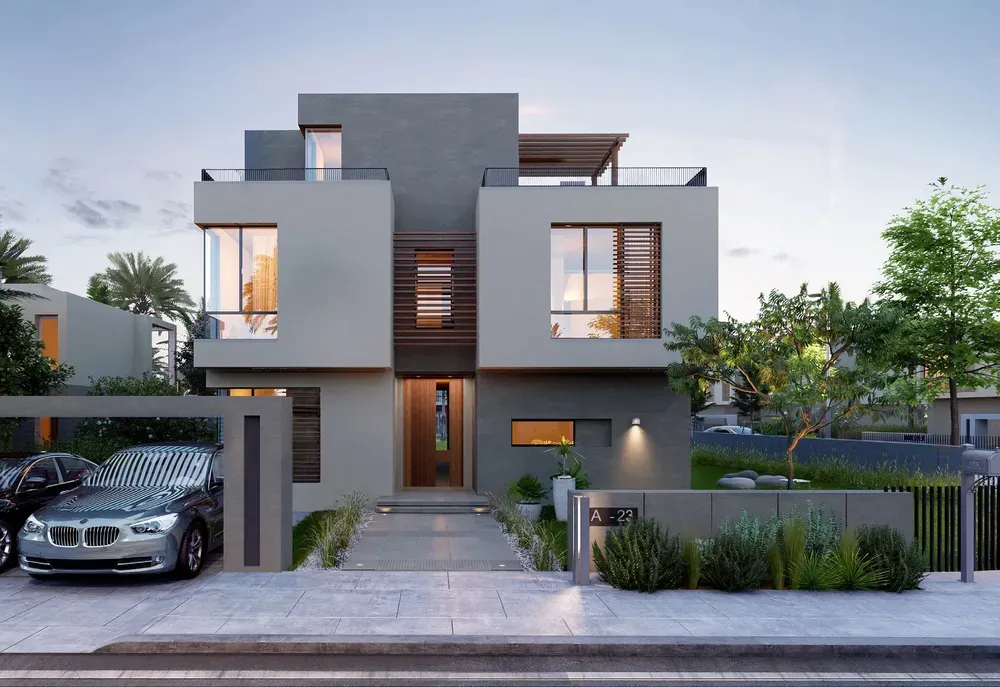
The Concept Behind SODIC East
The idea of SODIC East rests on delivering an integrated family community serving family members across different life stages, so that the home is not separated from the rest of daily life.
The project’s neighbourhoods were therefore designed around open spaces and outdoor living, with education, sport, entertainment, and social services provided inside the community itself.
Through the project, SODIC adopts the concept of community living. The presence of the school, the sports club, the social areas, and the daily services — alongside the paths and open spaces — creates an environment encouraging families to spend more time inside the project and connect with one another, which is what makes “life inside the community” the core idea on which SODIC East was built.
Why “Across Different Life Stages” Is the Operative Phrase
That phrase sounds like brochure language. It is not, and it describes the single most important thing about this product.
Most Egyptian compounds are built for one household profile at one moment — typically a young family with small children. The problem is that the household changes and the compound does not. Children grow up and need secondary schooling, then somewhere to go in the evening. Parents age and need walkable amenity rather than a drive to everything. Grandparents visit or move in.
A community designed across life stages solves for all of those at once, and the components here map directly onto it:
- An international school on site means the schooling years are covered without a daily commute out of the compound
- A 40-feddan sports club gives teenagers somewhere to go that is not a shopping mall
- A 2 km green spine with shops and restaurants gives adults and older residents walkable daily life
A community mall covers daily needs without leaving
The practical consequence for a buyer is about holding period. A compound you can stay in for twenty years holds value differently from one you outgrow in seven — because the resale buyer pool includes every one of those household types rather than just one.
For an investor, that is the quieter argument: broad demographic appeal means deeper, more consistent demand on exit.
SODIC East Location
SODIC East Location is in a distinguished position in New Heliopolis, between the Cairo–Suez road and the Cairo–Ismailia road, and near El Shorouk city — placing it close to East Cairo’s most important areas and the main roads connecting them to the rest of the cities.
The project also sits near Madinaty and the New Administrative Capital, with easy access to New Cairo and Cairo International Airport.
Distances and Nearby Landmarks
- El Shorouk city: about 5 minutes
- The LRT light rail station: about 10 minutes
- New Cairo: about 20 minutes
- The New Administrative Capital: about 25 minutes
- Cairo International Airport: about 25 minutes
- The monorail station: about 30 minutes
- Ninety Street (El Tasaa’een): about 35 minutes
- The Cairo–Suez road
- The Cairo–Ismailia road
- Madinaty
- The Regional Ring Road
Two Entries on That List Are Doing the Real Work
Most distance lists are filler. Two of these genuinely change the asset’s value, and they are not the ones buyers usually focus on.
Cairo International Airport at 25 minutes. This is the entry that matters most and gets the least attention — and for GCC buyers it is close to decisive.
Consider what 25 minutes to the airport means for a buyer based in Dubai, Riyadh, Doha, or Kuwait. It means the unit is genuinely usable on short trips. It means family can visit without a two-hour transfer at either end. And for an investor, it means the unit is lettable to the expatriate and corporate tenant pool that prioritises airport access above almost everything else — a tenant segment that pays well and stays.
Very few East Cairo compounds can claim 25 minutes to Cairo Airport. Most of New Cairo’s prime addresses are further.
The LRT station at 10 minutes. The light rail is the structural infrastructure story in East Cairo, and it is routinely underpriced by buyers because it is new.
The LRT connects the eastern corridor — including New Heliopolis, El Shorouk, and onward toward the Administrative Capital — with fixed-rail transit. Fixed rail does something road access cannot: it is permanent, it does not congest, and historically it lifts land values within its catchment because it changes who can live somewhere and still work elsewhere.
Ten minutes to an LRT station puts SODIC East firmly inside that catchment. For a long-hold buyer, that is one of the stronger structural arguments available in the eastern market.
Being Honest About the Trade-Off
The same list contains the counter-argument, and it should be stated plainly rather than buried: Ninety Street at 35 minutes and New Cairo at 20 minutes.
If your work, your children’s current school, or your social life is centred on Ninety Street and the Fifth Settlement, this is not a convenient address — it is a half-hour-plus drive each way.
SODIC East is a New Heliopolis / El Shorouk / Administrative Capital corridor address, not a Fifth Settlement one. That is the correct way to evaluate it. Judged on its own corridor, 5 minutes to El Shorouk and 25 to the Capital is strong. Judged as a substitute for Fifth Settlement, it is not, and the lower land cost of New Heliopolis is precisely why the pricing and the density are what they are.
SODIC East Master Plan
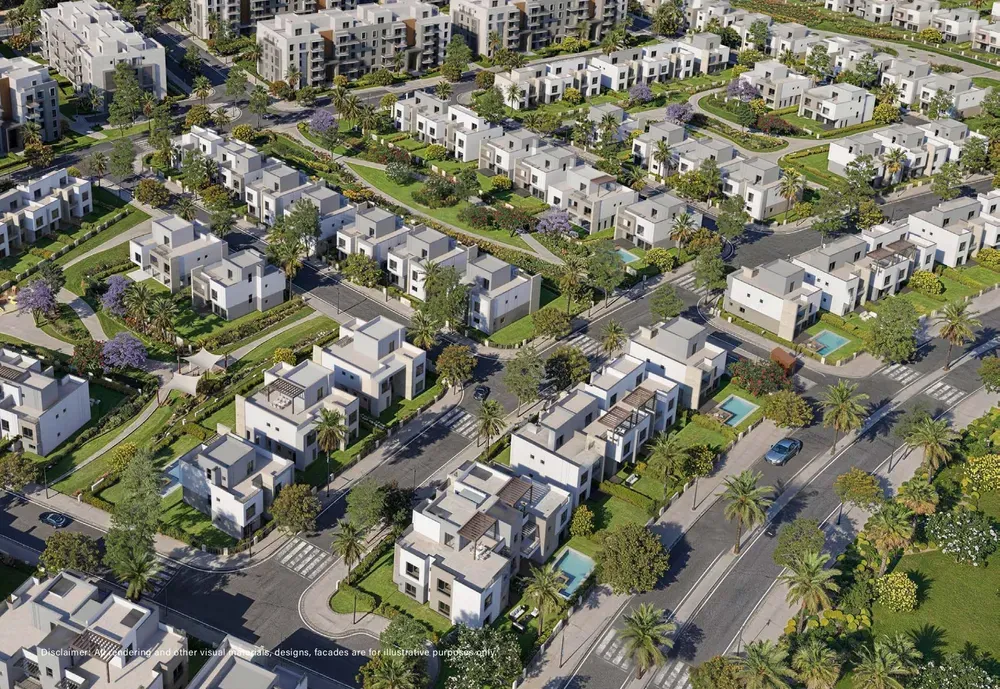
SODIC based the design of SODIC East on planning that balances residential zones against open spaces, distributing units in a way that gives residents greater privacy and ease of movement inside the compound.
The SODIC East Master Plan came from the design of the international firm Sasaki, with attention to linking the project’s parts to one another through walking and cycling paths and open areas that gather residents and provide suitable places for daily activities and recreation.
The design comprises residential zones graded in character, alongside areas for services and social and recreational activities, relying on green spaces as a core element of the project’s form.
The Green Spine was designed to be one of the main elements in the planning of SODIC East, linking different parts of the compound and providing spaces for movement, sitting, and daily activities — so the project ultimately delivers an organised community that is easy to move within and combines housing, activities, and services in one place.
Why the Sasaki Name Is a Real Credential, Not Decoration
Developers attach international design names to projects constantly, and most of the time it means a façade consultation. In this case the claim is specific and checkable: Sasaki produced the master plan — the land-use structure itself, not the styling.
That distinction matters because master planning is where a compound’s liveability is permanently determined. Once the roads, plot boundaries, open-space network, and service locations are fixed, they cannot be changed. Finishes can be upgraded; a bad plan cannot be fixed after it is built.
Sasaki is a landscape-and-urban-design practice with a long international record, and the signature of that discipline is visible throughout this plan: connected open space as the organising framework rather than leftover land between buildings.
The practical test for a buyer is whether the plan reads as a network or a subdivision. Here it reads as a network — the Green Spine connects the parts, the Ravine anchors an open area, the paths link neighbourhoods to services. That is the difference between a compound with gardens and a compound built around its open space.
The Green Spine: What a 2 km Linear Park Actually Does
This is the plan’s central device and worth understanding properly, because it is unusual.
Most compounds distribute amenity as destinations — a clubhouse here, a pool there, retail at the gate. You drive or walk to each one, and the space between them is just road.
A linear spine inverts that. A 2 km green corridor with walking routes, sports activity, play areas, shops and restaurants along it means the amenity is continuous rather than pointed. You do not go to the park; you live along it.
Three consequences follow:
It generates incidental daily use. A 2 km route with things along it gets walked. A distant clubhouse gets driven to on weekends. The first produces a community that uses its own public space; the second produces empty landscaping.
It distributes value more evenly. When amenity is a single destination, units near it command a premium and units far from it suffer. A spine running through the project means far more units sit within a short walk of amenity — which narrows the internal price gradient and widens the pool of genuinely good units.
It creates frontage for the retail. Shops and restaurants along a walked route trade better than retail at a gate that people drive past.
When you visit, walk the spine from the phase you are considering and note how far along it you are. Proximity to the spine is one of the strongest position variables in this project, and it is not obvious from a floor plan.
SODIC East Area and Land Breakdown
SODIC East extends across a total area of 655 feddans in New Heliopolis, and SODIC has ensured that open spaces are the largest element in the project’s planning — with green and open spaces exceeding 84% of the compound’s total area, meaning more than 550 feddans approximately, while buildings, residential units, services, roads, and the project’s remaining elements occupy the balance.
Open spaces in SODIC East are not limited to gardens scattered between the residential zones. They comprise a set of main elements shaping the project’s form:
- The Green Spine: a green promenade extending 2 kilometres, comprising walking areas, sports activities, play zones, shops and restaurants
- The Ravine: a green area extending across 15 feddans, providing walking paths and open spaces for recreation and relaxation
- SODIC Sports Club: extending across more than 40 feddans
- A mixed-use commercial district: approximately 27 feddans, comprising shops, restaurants, offices, and clinics
- Alongside the international school, service zones, and various facilities
Area Details
- Total area: 655 feddans
- Green and open spaces: more than 84% of the project
- The Green Spine: a 2 km green promenade
- The Ravine: an open area across 15 feddans
- The sports club: more than 40 feddans
- The commercial district: approximately 27 feddans
Running the 84% Number Properly
This is the most important figure in the entire project and almost every buyer reads it as marketing. Do the arithmetic instead.
84% of 655 feddans is roughly 550 feddans of open and green space. That leaves approximately 105 feddans for everything else — all buildings, all units, all services, all roads, the school, the clubhouse structures, the commercial district.
To put it plainly: about one feddan in six is built on.
For comparison, a typical Egyptian compound runs somewhere in the region of 20–30% built footprint. At roughly 16%, SODIC East sits at the low-density end of the market by a clear margin.
Two things follow, and the second is the one investors should focus on.
For a resident, low density is the amenity. It means distance between buildings, real sightlines, air and light, and green space you can see from the window rather than drive to. It is the single variable that most determines whether a compound feels spacious or packed — and unlike finishes, furniture, or facilities, it cannot be retrofitted. The density is set permanently at master plan stage.
For an investor, low density is scarcity. Built area generates the developer’s revenue, which means every feddan left open is revenue deliberately forgone. A developer can always add more units to a dense site later; it is structurally impossible to add open space to a built one. As East Cairo continues to densify around it, a project that locked in 550 feddans of green becomes progressively harder to replicate — and the gap between it and newer, tighter competitors widens rather than narrows.
Checking the Component Numbers
The named components confirm the 84% is substance, not rounding:
550 feddans of open space, of which 15 go to the Ravine and the Green Spine runs 2 km. The sports club alone is more than 40 feddans — larger than many entire compounds in New Cairo. The commercial district at 27 feddans is a genuine mixed-use quarter with offices and clinics, not a strip of convenience retail.
Add the international school, and the serviced component here is closer to a small town’s provision than a residential compound’s.
SODIC East Units and Sizes
SODIC East comprises a varied collection of residential units suiting different needs, from apartments in their various sizes through to larger units such as townhouses, twin houses, and villas.
- SODIC East Apartments: from approximately 80 sqm
- Duplexes: from approximately 180 sqm
- SODIC East Townhouses: from approximately 180 sqm
- Twin houses: from approximately 220 sqm
- SODIC East Villas: from approximately 250 sqm
Sizes and internal layouts differ according to each phase and the unit model released inside SODIC East Compound.
Why the 80 sqm Apartment Is Strategically Important
An 80 sqm entry inside a SODIC compound deserves attention, because it is not what the brand’s reputation would predict.
SODIC is positioned as a premium developer. An 80 sqm apartment is a genuinely accessible unit size — one or two bedrooms, suitable for a young couple, a small family, a first-time buyer, or an investor targeting the rental market.
Including that size in a 655-feddan premium community does two things:
It widens the buyer pool substantially. The compound is not restricted to the EGP 40 million-plus segment — there is an entry tier that lets buyers access SODIC’s planning, amenity, and management at a fraction of the villa cost.
It is the strongest rental product in the project. Small apartments let more easily, to more people, at better yields relative to capital than large villas. For an investor whose objective is income rather than capital appreciation, the 80 sqm unit inside a low-density premium community with an airport 25 minutes away is the most interesting line on the price list.
The Unit Ladder and What Each Tier Suits
- Apartments (80 sqm+): entry buyers, young households, and rental investors — the most liquid tier on resale
- Duplexes (180 sqm+): families wanting house-like volume with apartment-level service charges
- Townhouses (180 sqm+): families wanting a private garden at the lowest house-format entry
- Twin houses (220 sqm+): typically the best space-per-pound in the project
- Villas (250 sqm+): buyers prioritising privacy, plot, and position
One practical note: SODIC East Family Houses — the townhouse and twin house formats — tend to be the sweet spot in large compounds like this. They deliver private outdoor space and house format without the plot premium and running costs of a standalone villa, and they resell to the broad family segment rather than a narrow luxury one.
SODIC East Prices in 2026
SODIC East Prices differ according to unit type, phase, area, and the unit’s position inside the project — so SODIC has offered a range of price levels suiting different unit types. Current prices start from approximately EGP 14.7 million, rising progressively in the larger units and the phases with a more private character.
SODIC East Prices by Phase
- Oak: prices from approximately EGP 14.7 million
- Meadows: from approximately EGP 29.2 million
- Hazel: from approximately EGP 43.5 million
- Amberwood: from approximately EGP 71.3 million
How to Read a Five-Fold Price Ladder
From EGP 14.7 million to EGP 71.3 million is close to a five-fold spread inside one compound. That is wide, and understanding what you are paying for at each step is the most useful decision you will make here.
The ladder reflects three stacked variables, and it helps to separate them:
Unit format. Oak at EGP 14.7 million is apartment territory. Amberwood at EGP 71.3 million is premium villa territory. A large part of the gap is simply square metres and whether the unit is attached or standalone.
Position within the plan. The source notes the higher phases carry “a more private character.” In practice that means lower density, better frontage onto open space or the Green Spine, and greater separation from traffic and the commercial district.
Phase timing. Later phases typically price above earlier ones in the same project, independent of product.
Which Phase Actually Suits You
Here is the practical framework.
Oak at EGP 14.7 million is where the value argument is strongest, and the reason is structural rather than about the unit itself. Every buyer in this compound — at every price point — shares the same 550 feddans of open space, the same Sasaki plan, the same 40-feddan sports club, the same international school, the same Green Spine, the same commercial district, and the same SODIC management.
The amenity does not scale with the price paid. An Oak buyer receives essentially the same community infrastructure as an Amberwood buyer, for roughly a fifth of the outlay. For an investor, and for most end users, that is the sharpest value proposition on the list.
Amberwood at EGP 71.3 million is buying privacy, plot, and position — which are genuinely scarce and genuinely valuable to the buyer who wants them. But it is a lifestyle purchase, not a yield purchase.
Meadows and Hazel, between EGP 29.2 and 43.5 million, are the family-house middle — the broadest end-user segment and typically the most reliable resale band.
The one question that cuts through all of it: ask for the price per metre in each phase, not just the entry price. The entry figures compare different products and tell you less than they appear to. Per-metre pricing reveals where the real position premium sits — and that is the number worth negotiating on.
SODIC East Payment Plan
SODIC offers flexible payment systems at SODIC East allowing the unit to be purchased without a down payment, with the unit value paid in instalments across a long period — reducing initial payments and easing ownership of the project’s different units.
- Down payment: 0% of the unit value
- Instalment period: up to 10 years
- What 0% Down Over 10 Years Actually Means
This is the most aggressive payment structure in the Egyptian market, and it deserves to be understood rather than just admired.
Zero down payment means you secure a unit at today’s price without deploying capital at contract. On an EGP 14.7 million Oak unit, that is EGP 14.7 million of property locked at today’s pricing with nothing paid upfront.
Three implications, and the third is the one to be careful about.
It is an exceptionally powerful inflation hedge. In an inflationary currency environment, SODIC East Installments spread across ten years at a fixed nominal price fall in real terms every single year. The final instalment in 2036 will cost a fraction of today’s equivalent in purchasing power. A zero-deposit, ten-year, fixed-nominal-price contract is, in purely financial terms, among the most favourable structures a buyer can obtain.
It preserves all your liquidity. Capital that would have gone to a 10% or 20% deposit — EGP 1.5 to 3 million on an Oak unit — stays available for other deployment.
It also removes the natural brake on over-committing. A deposit forces a buyer to confront affordability at the outset. Zero down does not. Price out the full annual instalment across the entire ten years before signing, against a realistic view of your income, not just the comfort of a zero entry. A ten-year obligation on EGP 71.3 million is a serious commitment regardless of how light the first payment is.
One question to ask: are instalments tied to construction milestones or to calendar dates? Milestone-linked payments align the developer’s delivery incentive with your money and are the single best protection available to an off-plan buyer.
SODIC East Facilities and Services
SODIC East Compound comprises a set of services and facilities covering residents’ daily, recreational, and sporting needs, distributed inside the project to sit close to the residential zones:
- SODIC Sports Club: comprising a range of sporting activities and facilities, across more than 40 feddans
- The international school: providing education inside the residential community
- The commercial district: comprising shops, restaurants, offices, and clinics
- Community Mall: for daily services and needs
- The Green Spine: a green promenade comprising walking areas, activities, and seating zones
- The Ravine: an open area for recreation and relaxation
- Walking and cycling paths: distributed across the project’s parts
- Restaurants and cafes: within the commercial and recreational areas
- A mosque: serving the compound’s residents
The Three That Change Daily Life
The international school. This is the highest-value entry on the list and the one that most affects both liveability and resale. In Cairo, the school run is one of the largest recurring costs of family life — in time, fuel, and traffic exposure. A school inside the compound removes it entirely. It also directly supports resale value: families buy schooling catchment, and a compound with a school on site has a permanent demand driver that neighbouring projects cannot copy.
The clinics inside the commercial district. Not an on-site clinic in the holiday-resort sense, but medical practices within a 27-feddan mixed-use quarter. For a family with young children or older parents, routine medical access within walking distance is worth considerably more than it sounds.
The offices in the commercial district. This is the most overlooked item. Offices inside a 27-feddan mixed-use quarter mean some residents can work without commuting at all, and that others will come into the compound for work — which supports the retail, keeps the commercial district trading outside weekends, and gives the community weekday life rather than a dormitory rhythm.
Who Should Buy at SODIC East?
- Families planning a long hold: the across-life-stages design and the on-site school are built precisely for this
- GCC buyers: 25 minutes to Cairo International Airport is unusually strong for East Cairo
- Rental investors: the 80 sqm apartment in a low-density premium community near the airport is the yield play
- Value buyers: Oak at EGP 14.7 million accesses the full 550 feddans of amenity for a fifth of Amberwood’s price
- Long-horizon buyers: 0% down over 10 years at a fixed nominal price is the strongest inflation hedge on the market
- Buyers who prioritise space over address: 16% built footprint is a density very few compounds match
- LRT-corridor believers: 10 minutes to fixed rail is a structural, not cosmetic, advantage
Who Should Look Elsewhere
Being direct, because it saves time:
- Anyone centred on Ninety Street or the Fifth Settlement — 35 minutes each way is a real cost
- Buyers wanting an established, fully delivered community today rather than a maturing one
- Buyers whose priority is the lowest absolute entry price in East Cairo — New Heliopolis has cheaper options without this amenity load
SODIC: The Developer
SODIC was founded in 1996, and across three decades has built a strong name in the Egyptian real estate market by developing integrated residential and commercial communities in West Cairo, East Cairo, and the North Coast.
The company’s projects currently comprise more than 30,000 residents, with clear focus on good planning, design quality, and providing integrated communities that go beyond the idea of residential units alone.
SODIC’s Most Prominent Recent Projects
- The Estates — New Zayed
- Ogami — Ras El Hekma
- June — North Coast
- Caesar — North Coast
Why 30,000 Residents Is the Number That Matters
A portfolio list tells you what a developer launched. 30,000 residents tells you what it delivered and what people chose to live in.
That distinction is the core of developer due diligence in Egypt. Launches are easy; handing over communities that fill up and function is not. A company with 30,000 people living in its projects has, by definition:
Delivered repeatedly across decades, through multiple currency devaluations, policy shifts, and market cycles — including the 2011 and 2016 periods that removed a number of competitors from the market.
Built operational management capability. Running a community after handover — maintenance, security, landscaping, facility management — is a different business from building one, and it is the thing that determines whether a compound still looks right ten years later.
Established a reputation it must protect. A developer with 30,000 residents and eight active projects has far more to lose from a failed delivery than a company with one project and no track record. That alignment is worth more to an off-plan buyer than any contractual guarantee.
The Due Diligence Step That Beats Every Brochure
Here is the strongest move available to you, and SODIC makes it unusually easy.
Go and see Eastown. It is in East Cairo, it is delivered, it is occupied, and it is the closest comparable to what SODIC East is trying to be — an integrated community with a commercial component, not just a residential compound.
Specifically, check:
Finish and common-area condition years after handover. Maintained or tired?
Is the commercial district actually trading? This is the test that matters most, because SODIC East’s whole proposition includes a 27-feddan mixed-use quarter. If Eastown’s retail works, that is evidence SODIC can deliver a working commercial component. If it is half-empty, ask why.
Landscaping and open space. Full, planted, maintained — or cut back after handover?
Occupancy. Lived in, or substantially empty?
Talk to residents. Handover timing versus promise, service charge levels and increases, maintenance responsiveness, and whether they would buy from SODIC again.
Any developer can produce a convincing render. SODIC can hand you several delivered, occupied communities to inspect — and with a project whose central claims are about master planning and integrated amenity, inspecting an existing SODIC community is the only way to verify those claims rather than accept them.
How SODIC East Compares
Versus Fifth Settlement compounds: those offer the established prime address and shorter trips to Ninety Street, at higher land cost and markedly higher density. SODIC East trades address prestige for space — 16% built footprint is not available in mature Fifth Settlement.
Versus Madinaty (nearby): Madinaty offers enormous scale and a genuinely functioning city with every service. SODIC East offers far lower density, a Sasaki plan, and a premium developer’s management at a smaller, more curated scale.
Versus New Administrative Capital residential (25 minutes): the Capital offers newer infrastructure and lower per-metre pricing, but occupancy is still catching up with supply. SODIC East sits in an established, populated corridor with El Shorouk 5 minutes away.
Versus other New Heliopolis projects: this is SODIC East’s strongest ground. The combination of 655 feddans, 84% open space, a Sasaki master plan, an on-site international school, and a 30-year developer record is not matched locally.
The Bottom Line
SODIC East is a 655-feddan integrated community in New Heliopolis, between the Cairo–Suez and Cairo–Ismailia roads, master-planned by Sasaki, with more than 84% of the land — roughly 550 feddans — left green and open, leaving about 105 feddans built.
The amenity load is unusually heavy: a 2 km Green Spine, the 15-feddan Ravine, a 40-feddan sports club, a 27-feddan mixed-use district with offices and clinics, an international school, and a community mall — 5 minutes from El Shorouk, 10 from the LRT, and 25 from Cairo International Airport.
Units run from 80 sqm apartments through 180 sqm duplexes and townhouses, 220 sqm twin houses, and 250 sqm villas, across four phases: Oak from EGP 14.7 million, Meadows from EGP 29.2 million, Hazel from EGP 43.5 million, and Amberwood from EGP 71.3 million — all available at 0% down over up to 10 years.
Two things make this genuinely distinctive. The density cannot be replicated — no developer can add 550 feddans of open space to a built site, and as East Cairo tightens around it, that gap widens rather than closes. And the amenity does not scale with price — an Oak buyer at EGP 14.7 million shares the same plan, club, school, spine, and management as an Amberwood buyer at EGP 71.3 million.
Before you sign: ask for price per metre by phase rather than entry prices, walk the Green Spine from your phase to see how far along it you sit, go and inspect Eastown’s commercial district to verify SODIC can deliver a working mixed-use quarter, and price out the full ten-year instalment — because 0% down makes it easy to skip that arithmetic, and it is the arithmetic that matters.
FAQs
SODIC East sits in New Heliopolis, between the Cairo–Suez road and the Cairo–Ismailia road, near El Shorouk city. It is about 5 minutes from El Shorouk, 10 minutes from the LRT light rail station, 20 minutes from New Cairo, 25 minutes from both the New Administrative Capital and Cairo International Airport, and 35 minutes from Ninety Street.
Apartments start from approximately 80 sqm, duplexes and townhouses from approximately 180 sqm, twin houses from approximately 220 sqm, and villas from approximately 250 sqm — with layouts differing by phase and unit model.
Compound Unit Types
- Area : m2 - m2
- Price : EGP - EGP
- Area : m2 - m2
- Price : EGP - EGP
- Area : m2 - m2
- Price : EGP - EGP
- Area : m2 - m2
- Price : EGP - EGP
Facilities and Services
- Mosque
- Cafe and Restaurant
- International Schools
- Club House
- Electronic Security Gates
- Commercial Buildings
- gym
- 24 Hours Security
Recommended projects

_560x400.jpg)


Compound Location
About the developer

SODIC Developments: The Complete 2026 Guide to Egypt’s Blue-Chip DeveloperAsk any experienced buyer in Egypt to name the developers whose communities hold their value, and SODIC will be in the first breath. That reputation was not bought with advertising — it was earned across nearly 30 years of delivered projects, from Allegria and Westown in Sheikh Zayed to Eastown in New Cairo and n... Read more